In this article, I’m going to share a lot of practical insights and real-world tips.
I want to give you a complete overview of how I run an affiliate marketing campaign from start to finish.
Think of this as a step-by-step guide for beginners.
You’ll get a clearer understanding of each stage of an affiliate campaign — how the process works, what happens at each step, and how everything connects together.
I’ll break everything down into a clear system and workflow so it’s easier to follow and apply.
Choosing a Traffic Source for Your Affiliate Campaign
The first step is choosing a traffic source and finding an offer to promote.
Personally, I prefer to deeply understand one traffic source first, then look for offers that fit that traffic source well.
For example, let’s say you decide to specialize in mobile advertising. Once you make that decision, the next step is figuring out which mobile traffic sources are currently popular and actively used by affiliates.
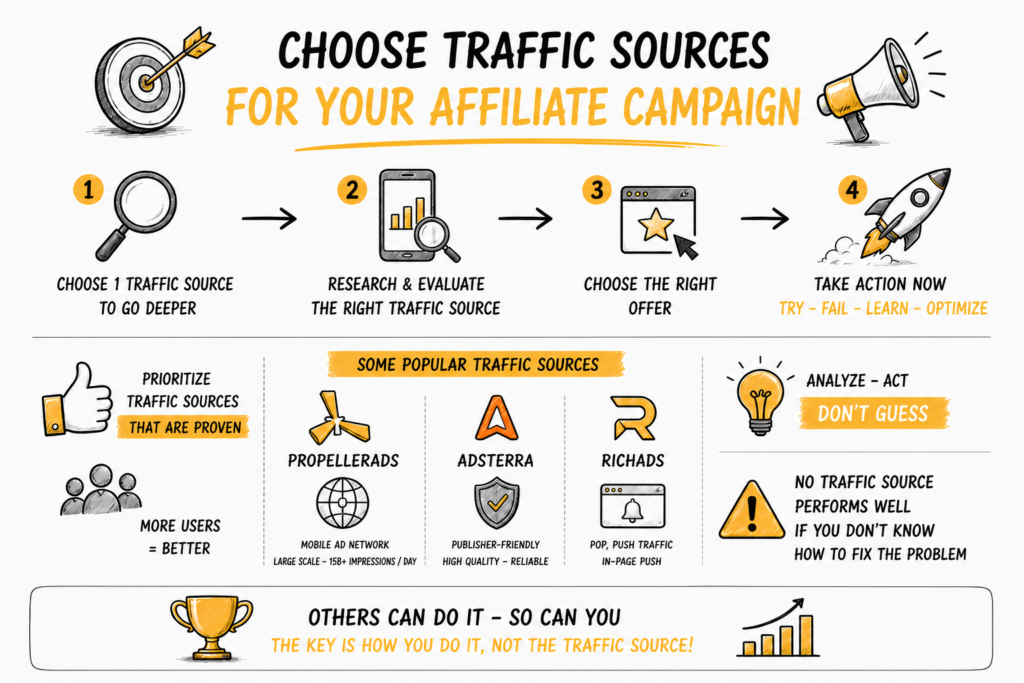
In the mobile space, there are many platforms where you can buy traffic.
I know a lot of beginners just want someone to tell them which traffic source is “the best.”
But honestly, there’s no perfect traffic source. Every platform has its own strengths and weaknesses. You need to do your own research and make a decision based on your goals and budget.
At the same time, don’t spend forever researching.
You still need to take action.
There’s a funny example I like to use:
Some overweight guy spends an entire month searching for the “perfect gym” — but never actually leaves his chair to work out.
Don’t become that guy.
Taking action and failing will teach you far more than endlessly overthinking every decision. In most cases, real experience helps you improve much faster.
When choosing traffic sources, I usually prefer platforms that are already well-known and widely used in the affiliate industry.
If thousands of affiliates are actively spending money there, that’s usually a good sign.
Here are a few popular traffic sources:
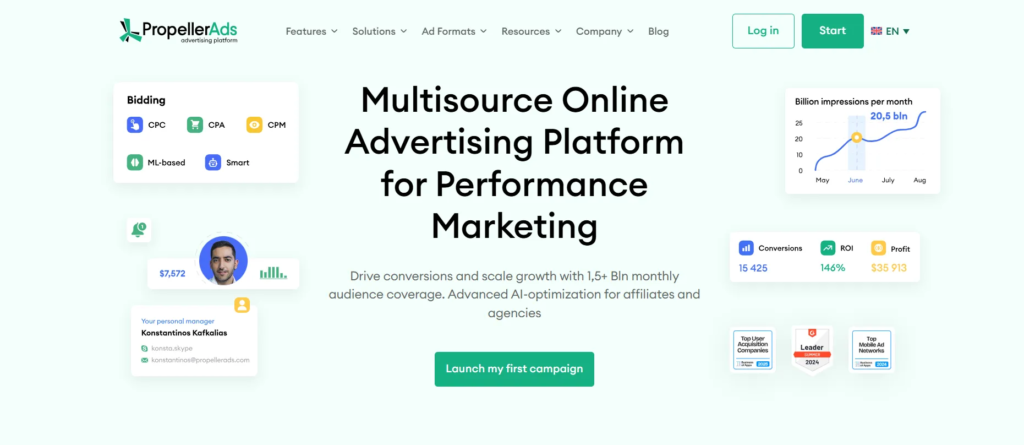
- PropellerAds — One of the largest mobile advertising networks in the world, serving massive amounts of traffic every day.
- Adsterra — Known for stricter publisher screening, which often leads to better traffic quality and stronger conversions, although the traffic can be more expensive.
- RichAds — A platform focused heavily on Pop, Push, and In-Page Push traffic.
Here’s something important to understand:
If you can’t make money with a well-known traffic source, the problem is usually not the platform itself.
Why?
Because many other affiliates are already making money with it. These companies process huge advertising volumes and have stayed in business for years for a reason.
If other people are succeeding while you are not, there’s probably something in your campaign, targeting, offer, or strategy that needs improvement.
On the other hand, if you test some unknown traffic source that nobody talks about, things become much harder to evaluate.
If your campaign fails, you won’t know whether the problem came from your campaign setup — or from the traffic source itself.
Choosing an Offer for Your Affiliate Campaign
In affiliate marketing, the offer is one of the biggest factors behind a successful campaign.
If you choose an offer that doesn’t convert, your campaign will probably fail — even if your landing page looks amazing and your ads are highly optimized.
The problem is that affiliate networks contain thousands of offers.
You can’t just pick one randomly.
Choosing the right offer requires strategy, testing, and experience.
Here are a few things that can help:
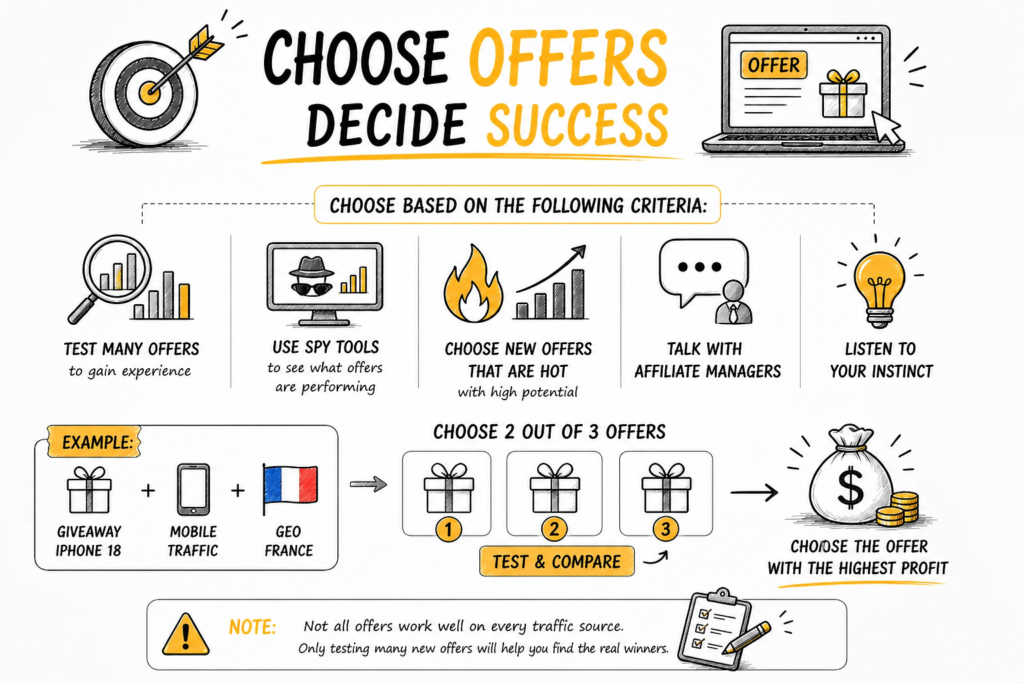
- Test multiple offers to gain experience
- Use spy tools to see what other affiliates are promoting
- Look for trending or high-volume offers
- Talk to affiliate managers
- Trust your instincts sometimes
For example, let’s say you want to promote an iPhone 18 giveaway campaign on mobile traffic targeting users in France.
There are countless sweepstakes offers available across different affiliate networks, so you’ll usually have several options to choose from.
Instead of relying on a single offer, it’s often smarter to test two or three similar offers first and compare the results.
One offer might convert far better than another — even when they look almost identical.
That’s why testing multiple offers is extremely important when starting a new campaign.
A quick note:
Some offers simply don’t convert well, even if they appear on the network’s front page or seem very popular.
In many cases, you cannot accurately judge an offer’s true potential until you’ve tested enough campaigns and built real experience yourself.
Steps to Launch an Affiliate Campaign
When you join an affiliate network, you’ll usually see a huge list of offers available to promote.
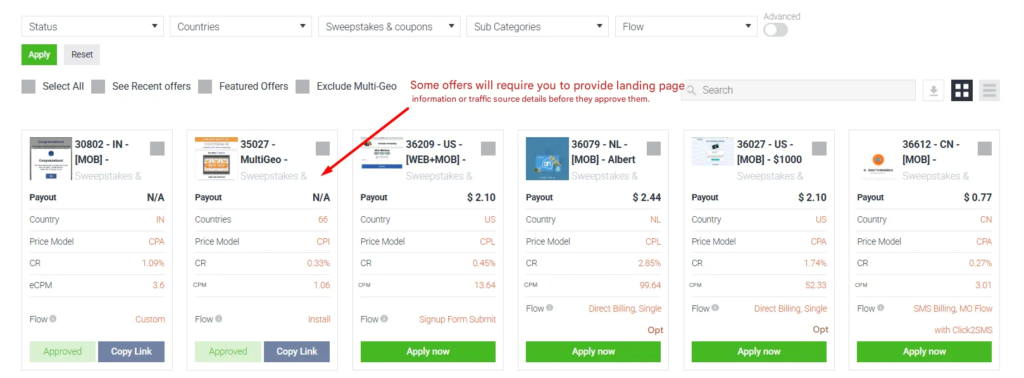
You can think of it like a marketplace where affiliates find products and campaigns to advertise.
Each offer comes with its own tracking link — often called an affiliate link.
However, if you try opening that link directly, you often won’t see the actual offer page, especially with mobile offers.
Why?
Because many offers use IP restrictions.
For example, if an offer is intended for users in France, only French IP addresses may be allowed to view the real landing page. Visitors from other countries might see a blank page, an error page, or something completely unrelated.
That’s why affiliates often use a VPN.
A VPN allows you to change your IP address — and sometimes even simulate different device types — by routing your connection through proxy servers. This lets you preview offers exactly the way real users would see them.
Once you have the affiliate link, the next step is placing it into your tracking tool and configuring your campaign.
In previous articles, I already explained some of the basic setup process, including:
- Taking the affiliate link from the network and adding it to a tracking tool
- Setting up the landing page and offer inside the tracker
- Generating your campaign URL
After your setup is complete and you have your campaign URL, you’ll then place that link into your traffic source and launch the campaign.
For example, inside PropellerAds, the setup process might look something like this:
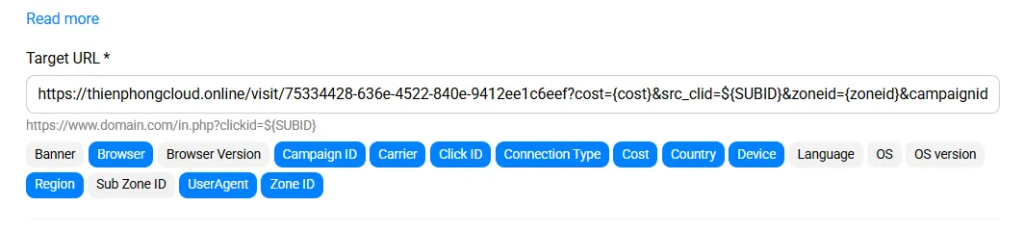
During campaign setup, you can usually configure additional targeting options such as:
- Android or iOS users
- WiFi or mobile data users
- Browser targeting like Chrome, Safari, or WebView traffic
One important note:
If you run campaigns on platforms like Facebook Ads, the tracking setup is often different.
That method is commonly called direct tracking, which differs from the redirect tracking method I explained earlier.
I won’t go too deep into that in this article, but you can always refer to the platform’s official documentation for more technical details.
Researching Your Affiliate Campaign More Deeply
A lot of affiliates launch campaigns and simply hope they become profitable.
But experienced affiliates usually do much more preparation work — even before spending a single dollar on ads.
That preparation is often what separates profitable campaigns from losing ones.
At this point, you should already have chosen your traffic source and the offer you want to promote.
Now it’s time to do some research.
Using Spy Tools to Analyze Competitors
Spy tools allow us to see what other advertisers and affiliates are doing.
With these tools, you can discover things like:
- What types of ads competitors are running
- How their landing pages are designed
- Which offers they are promoting
You can even check whether other affiliates are actively promoting the same offer you’re considering.
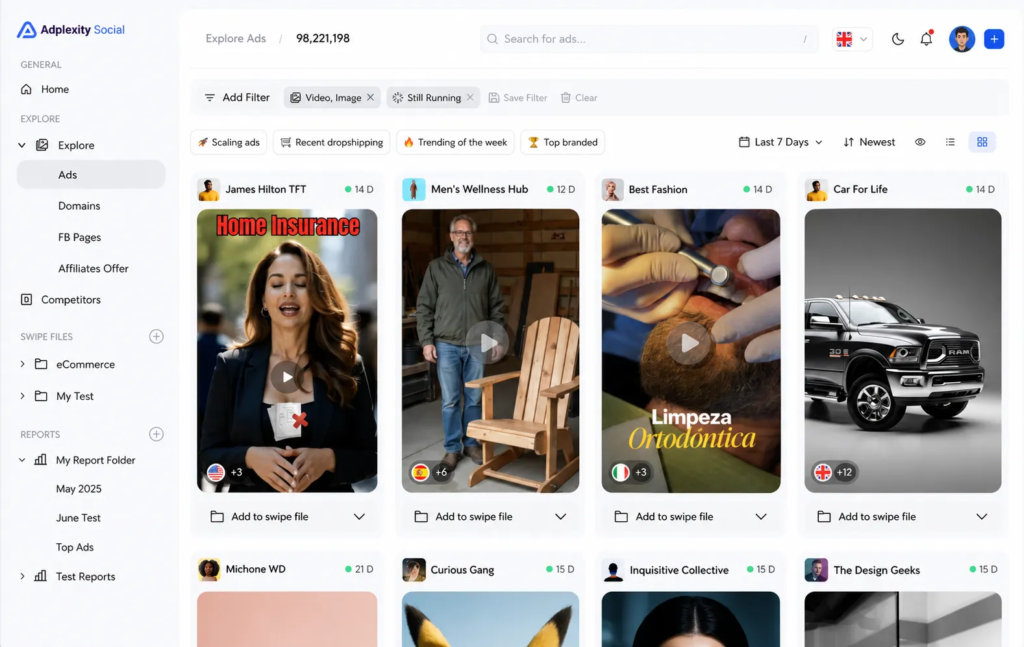
But don’t limit yourself to studying only affiliates.
You should also learn from major brands and experienced advertisers outside the affiliate space. Large companies spend enormous amounts of money testing marketing strategies, creatives, and messaging — there’s a lot you can learn from them.
A good spy tool gives you access to a massive amount of market intelligence.
Instead of spending weeks researching campaigns manually, you can quickly understand what’s currently working in the market and spot useful trends much faster.
Talking With Affiliate Managers
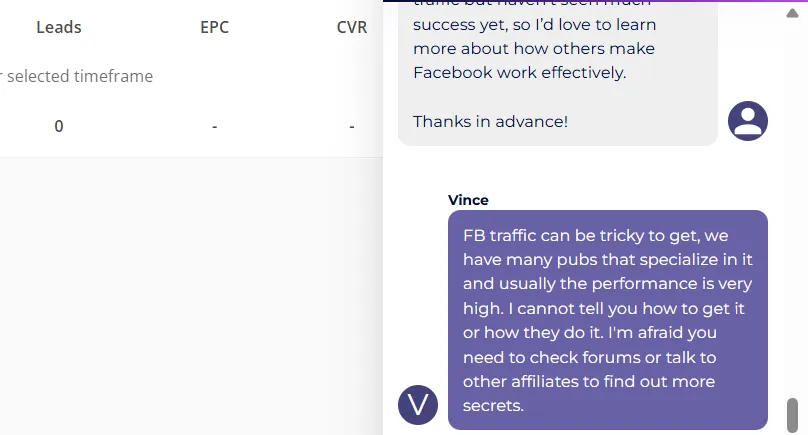
Affiliate managers are often very experienced people in the industry.
Because they work closely with many affiliates and campaigns, they usually have a broad understanding of what’s happening in the market.
When I first got into affiliate marketing, I honestly met some pretty unhelpful affiliate managers.
But over the years, the industry has improved a lot, and many affiliate managers today can provide genuinely useful insights.
For example, they may tell you:
- Which offers are currently performing well
- Which offers are trending or “hot”
- Which offers work best with mobile traffic
- Which countries tend to generate the highest revenue for a specific offer
Let’s say an offer allows traffic from multiple countries.
An experienced affiliate manager might already know which GEOs convert best, which ones are oversaturated, and where affiliates are currently seeing strong ROI.
That kind of information can be a huge advantage because it helps reduce unnecessary testing and lowers your risk when launching campaigns.
One important thing to understand:
Affiliate managers usually won’t reveal someone else’s exact campaign strategy or secret methods.
But even when they can’t share detailed tactics, they can often point you toward useful resources, case studies, or research directions so you can continue learning on your own.
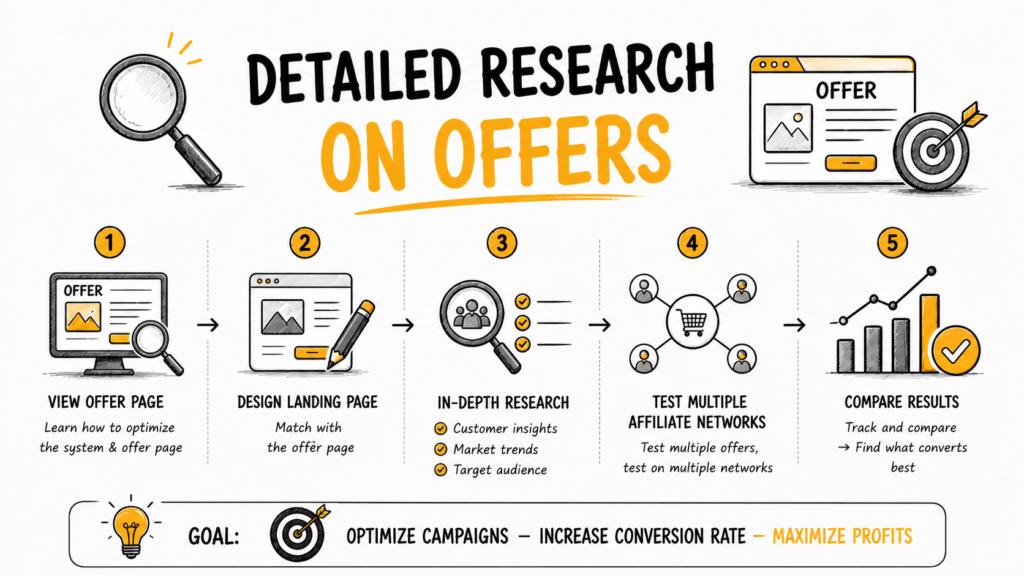
Researching the Offer in Detail
Take time to study the actual offer page carefully.
Look at how the advertiser structures the page, how they present the product, and how they optimize the user experience.
Understanding the offer page can help you design a landing page that matches the same style, messaging, and emotional flow — which often improves conversions.
From there, you can continue researching things like:
- The target demographic
- The niche and audience behavior
- The customer’s interests and motivations
Sometimes an offer is only available on a single affiliate network, so you have no choice but to test it there.
But what if the same offer appears on multiple affiliate networks?
In that case, I strongly recommend testing different networks — even when promoting the exact same offer.
Why?
Because conversion rates can vary significantly between networks.
Different affiliate networks use different tracking systems, optimization methods, advertiser relationships, and payout structures. In some cases, the same offer can perform noticeably better on one network than another.
Designing Ads in Affiliate Marketing
What kind of ads and landing pages are you going to use?
A lazy affiliate will usually skip this entire process and simply copy another affiliate’s ads and landing pages.
Honestly, I can’t blame you for that.
I’ve had lazy days too, and sometimes I’ve done the same thing myself.
The logic is simple:
“If another affiliate already has a profitable campaign, why not just copy what’s already working?”
And to be fair, that approach can work.

The problem is that it becomes very difficult to compete long term.
Affiliate marketing is an extremely competitive industry. If you only copy other people exactly, you’ll always be one step behind them.
When you find a landing page or ad creative inside a spy tool, several things may be true:
- The campaign could still be profitable
- The campaign might already be saturated
- The advertiser may even be preparing to shut it down
Even if a campaign is already dying, spy tools may still show high click volume because spy tools only collect advertising data — they don’t know the real profitability behind the campaign.
There’s another issue too:
Large affiliates with big budgets can afford to bid aggressively and dominate traffic sources. They can easily outspend and overpower smaller beginners.
So what should you do instead?
In general, I recommend focusing on three things:
- Create your own angles, headlines, and ad copy
- Find or design better ad creatives
- Build or improve your own landing pages
The good news is that modern AI tools make this process much easier than it was when I first started learning affiliate marketing.
Today, AI can help you brainstorm ideas, write copy, generate images, and speed up creative work dramatically.
Of course, there’s a downside too.
Because the barriers to entry are lower now, competition has also become much more intense.
Creative Secrets for Affiliate Ads
One useful habit is collecting interesting ads whenever you see them online.
When you come across an ad with a strong hook, clever design, or persuasive angle, save it somewhere for future inspiration.
Over time, you can build a massive library of ad examples that you can study whenever you need new ideas.
Many copywriters and marketers do this.
It’s commonly called a “swipe file.”
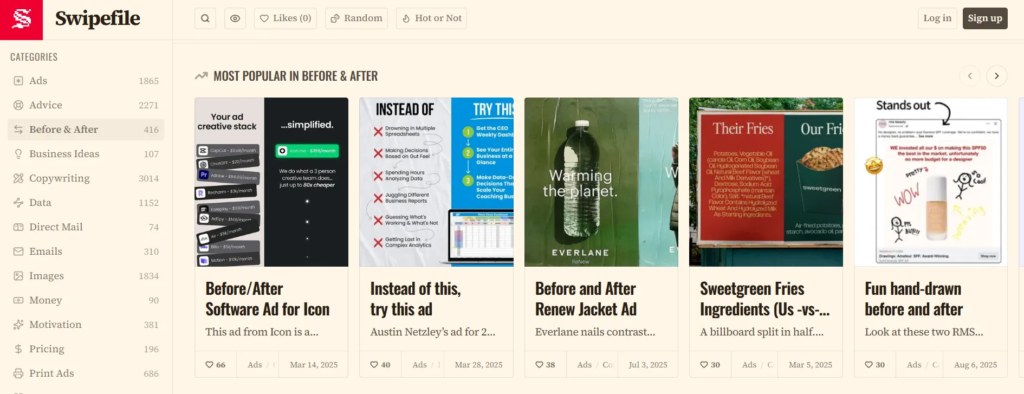
Today, there are even websites dedicated to collecting high-performing ads and organizing them into searchable swipe libraries for marketers.
In other words, the inspiration is already prepared for you.
Some popular platforms include:
I remember once getting inspiration from a Photoshop tutorial advertisement — and then adapting that core idea into a completely different niche.
That’s the interesting thing about advertising ideas:
Inspiration can come from almost anywhere.
At the end of the day, the only real way to become good at advertising is through practice and experience.
You need to study ads, test campaigns, observe user behavior, and repeat the process many times.
Eventually, you start developing intuition.
With enough experience, you can often sense whether an ad has potential — even before launching the campaign.
Preparing Your Affiliate Campaign Properly
You should prepare as much as possible before launching an affiliate campaign.
Once the campaign goes live, you’re spending real money.
And if your campaign isn’t optimized properly, your budget can disappear very quickly.
That’s why the goal is to become profitable as fast as possible before your testing budget runs out.
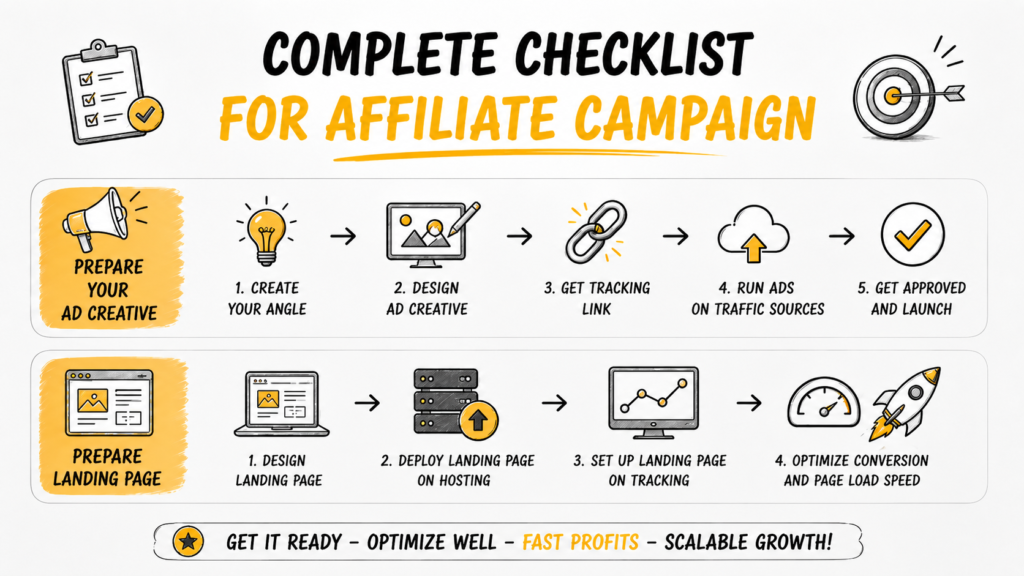
Preparing Your Ad Creatives:
Before launching, you should prepare your ads carefully:
- Brainstorm and write down different marketing angles
- Design ad creatives based on those angles
- Generate your campaign tracking links
- Upload your ads to the traffic source and wait for approval
The more prepared you are before launch, the smoother the testing phase will be.
Preparing Your Landing Pages:
You should also prepare your landing pages in advance:
- Design the landing page
- Upload it to your hosting server
- Configure the landing page inside your tracking tool
Make sure to review the earlier article about landing pages as well.
Small improvements can make a surprisingly large difference in conversion rates.
For example, you can:
- Add extra trust elements
- Improve the page structure
- Increase loading speed and performance
A faster landing page often leads to better user experience — and in many cases, higher conversions too.
Optimizing an Affiliate Campaign
One important optimization principle is traffic segmentation.
What do I mean by that?
Don’t run one giant campaign targeting everyone at the same time.
You need to separate and track different traffic segments because their performance can vary dramatically.
For example, a campaign that performs very well on mobile devices may perform terribly on desktop traffic.
There are generally two ways to approach this.
Segment First
The first method is separating traffic before launching the campaign.
For example, on platforms like Google Ads or Facebook Ads, you can create separate campaigns for different age groups.
After running the ads for a few days, you may discover that users aged 18–24 are not converting at all.
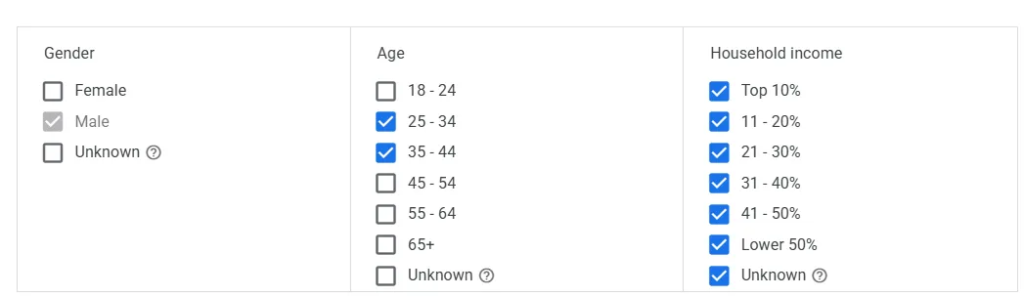
In that case, you can pause that segment and focus your budget elsewhere.
I use the same strategy with mobile traffic.
I usually separate mobile and desktop campaigns from the beginning because their behavior is often completely different.
Segment Later
The second method is launching broader campaigns first in order to collect data, then narrowing down to the most profitable segments later.
For example, let’s say you run a mobile campaign and later discover:
- Android traffic has a -50% ROI
- iOS traffic has a +30% ROI
At that point, you might block Android traffic completely and focus only on iOS users.
Then you continue analyzing the data further.
Maybe later you discover:
- Safari users generate 20% ROI
- Chrome users generate 50% ROI
Now you have another opportunity to optimize.
You could create a separate campaign specifically targeting iOS users who use Chrome — and even increase your bids to capture more of that profitable traffic.
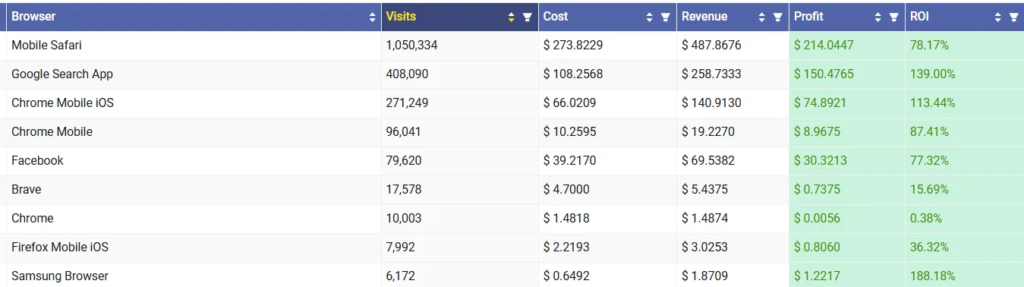
Of course, these are only simplified examples to help you understand the concept.
In real campaigns, optimization decisions depend heavily on the actual data, competition, budget, and market conditions.
Launching Your Affiliate Marketing Campaign
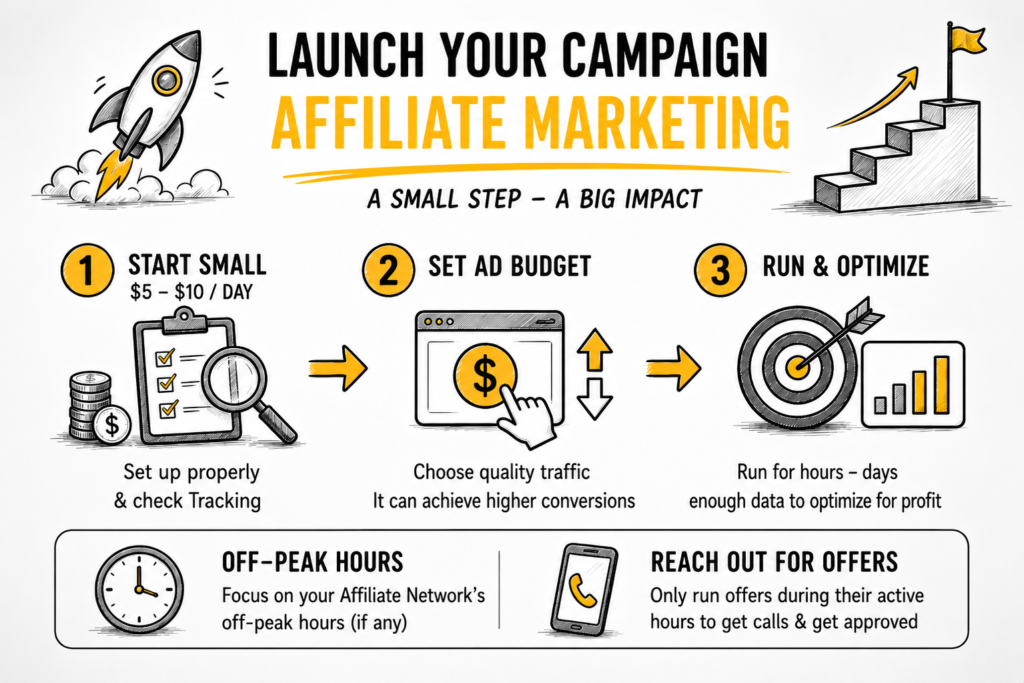
When launching your first affiliate campaign, it’s important to move carefully and take things step by step.
Think of it like climbing a staircase — one step at a time.
Yes, affiliate marketing has huge profit potential.
But in the beginning, you should focus on being careful and consistent rather than trying to scale too aggressively.
1. Start With a Small Budget
Begin with a low daily budget, something like $5–$10 per day.
Before spending larger amounts, make sure everything is configured correctly:
- Check your tracking setup
- Test your campaign links
- Verify that conversions are being tracked properly
A small mistake in tracking can waste a lot of money very quickly.
2. Set Your Initial Bids
Your advertising bid depends heavily on the traffic source you’re using.
In some cases, it can be worth bidding slightly above the average bid price because higher bids often give you better traffic quality and stronger ad placement.
Better placement can sometimes lead to significantly better campaign performance.
3. Run the Campaign and Collect Data
Once everything is ready, let the campaign run long enough to gather useful data.
After you have enough information, you can begin optimizing.
For some mobile traffic sources, you may gather enough data within only a few hours.
On larger platforms like Facebook Ads or Google Ads, the optimization process usually takes longer.
You always need to adjust based on the behavior of the traffic source you’re using.
One important thing to remember:
If the affiliate network gives specific rules or restrictions, you must follow them carefully.
For example, some lead-generation offers only allow traffic during business hours — such as 9 AM to 5 PM.
This is common for offers that collect phone numbers or customer inquiries.
In those cases, the company’s sales team may immediately call the lead after the user submits their information. If the lead converts, you receive a commission.
But if users submit their information outside working hours, the sales team may not respond quickly enough, which can reduce conversion quality.
Double-Check Your Affiliate Campaign Before Launching
Before launching your campaign, you should carefully review everything at least twice.
That said, when running your very first affiliate campaign, you usually won’t know how much potential it truly has.
The only real way to find out is to launch the campaign, spend some money, and analyze the results.
If something goes wrong, you can simply pause the campaign.
That’s one of the biggest advantages of paid advertising.
With free traffic methods, you may need weeks or even months before you know whether something is working. Paid traffic gives you feedback much faster.
One of the most important things to verify is your tracking setup.
In most affiliate campaigns, the traffic flow looks something like this:
Traffic Source → Tracking Software → Landing Page → Affiliate Network
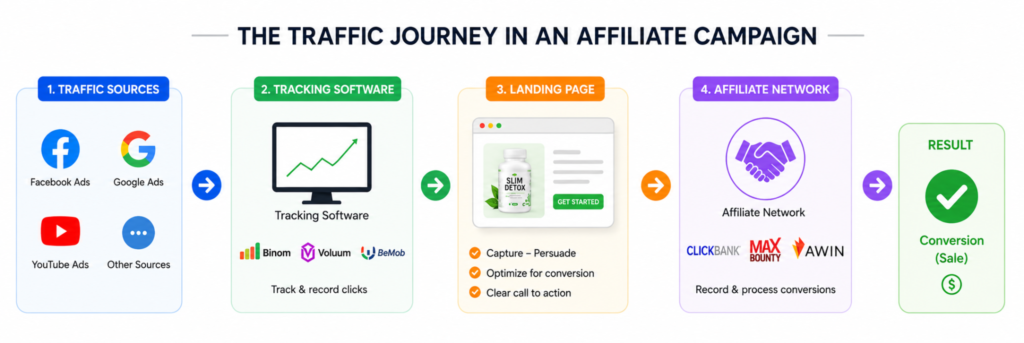
You need to make sure every step in that chain is functioning properly.
Check things like:
- Is the traffic source sending clicks correctly?
- Is your tracking software recording clicks properly?
- Is the affiliate network receiving the clicks?
- Are your postback URLs configured correctly?
If you’re unsure whether conversions are tracking properly, you can ask your affiliate manager to help you perform a “test conversion.”
This helps confirm that your tracking system is working correctly before you spend larger amounts of money on advertising.
Final Thoughts
When launching a new campaign, it’s usually smarter to start with a small budget.
Imagine setting your budget to $500, going to sleep, and waking up with zero conversions.
That would hurt.
Instead, begin with something small like $5–$30 per day and make sure everything is stable before scaling up.
A cautious start can save you from a lot of expensive mistakes and unnecessary headaches.
At this point, you already understand the core process of launching an affiliate campaign and making your first money with affiliate marketing.
The information in this guide is more than enough to help you get started.
But if you want to learn the process in greater depth and understand more advanced strategies, you can always continue with more advanced training later on.